

From Virtual Simracing to Real-World “Simshifting”: Why EVs Could Become Real-Life Sim Rigs
For years, simracing was viewed by many traditional enthusiasts as an imitation of “real driving.”
But what if the opposite turns out to be true?
What if simracing was actually an early prototype for where driving itself was heading?

Inside SimRacing Expo 2025: Passion, Progress, and a Market Searching for Maximum Grip
Walking out of Messe Dortmund, I felt optimism, and impatience.
This year’s SimRacing Expo 2025 proved simracing has passion, products, and momentum.
What it still needs is connection; to the broader motorsport world, and to the people who will define its future.
Will the simracing community fuel further growth by embracing the trends that are powering real life motorsport, and if it does, will real life motorsport finally begin to care a little more about simracing?
I’m already counting down the days to SimRacing Expo 2026 to find out.
From Game to Operating System: Why the Cosworth–iRacing Partnership Could Redefine Motorsport by 2030
On August 28, 2025, iRacing announced a landmark partnership with Cosworth, the legendary engineering firm producing everything from engines to steering wheels to, pertinently for this announcement, software.
At first glance, this might sound like a “nice upgrade” for sim racers who want to feel a little closer to the action: Cosworth’s Pi Toolbox, highly regarded in professional race telemetry, will be made available to all iRacing users.
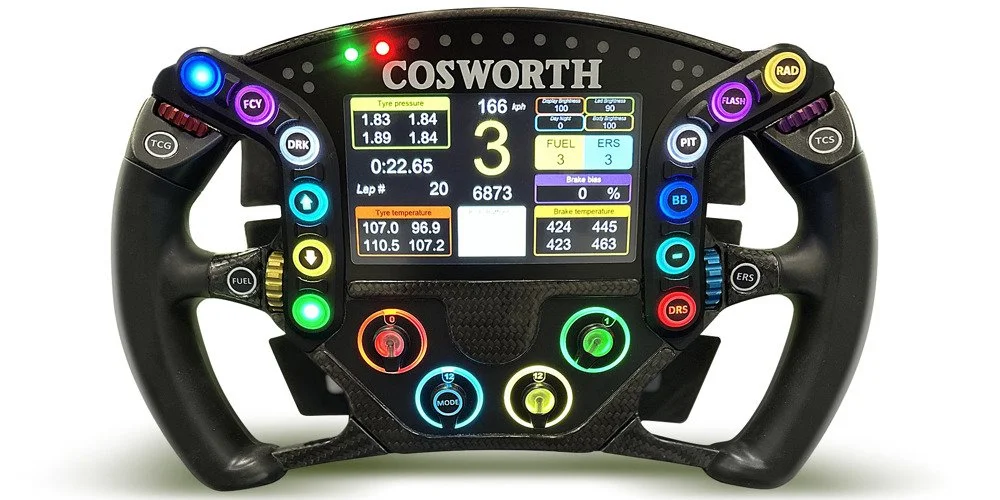
Cosworth is no stranger to the sim racing space, having already released consumer versions of some of their highly recognizable, real-life steering wheels.
But this news is far bigger than just new features for a PC sim.
The 7 Strategic Tensions That Could Define (or Derail…) Formula 1’s Future
Formula 1 is thriving, but it’s not infallible, nothing ever is.
Beneath the glitz of sold-out grands prix and viral TikToks lies a series of high-stakes contradictions, between innovation and regulation, prestige and pop culture, stability and spectacle.
Liberty Media has masterfully laid the foundation for F1’s business model and built on it, but that success now rests on balancing forces that pull in opposite directions:
The Concorde Agreement can lock teams in, but not manufacturers’ faith.
Expansion can fuel growth, but also burnout.
Fan engagement can surge…until scripted PR kills the magic.
F1’s long-term relevance will depend not on avoiding these tensions, but on mastering them. The game isn’t just winning races, it’s sustaining a global platform where culture, commerce, and competition collide.